
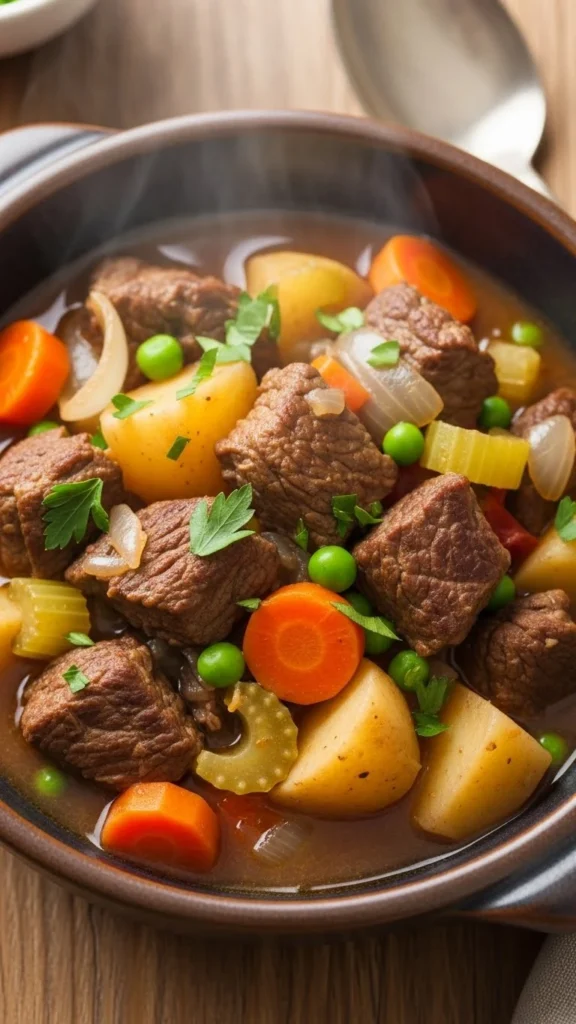
There’s nothing quite like a steaming bowl of beef stew to warm you from the inside out. This classic comfort food brings together fork-tender chunks of beef, hearty vegetables, and a rich, savory broth that’s been simmered to perfection. Whether you’re feeding your family on a chilly weeknight, preparing Sunday dinner, or hosting friends for a cozy gathering, this beef stew delivers every single time.
What makes this recipe truly special is the depth of flavor that develops through slow cooking. As the beef braises in its aromatic broth, it becomes melt-in-your-mouth tender while releasing its natural juices into the surrounding liquid. The vegetables soften just enough to soak up all that beefy goodness, and the sauce thickens into a luscious gravy that coats everything beautifully. The aroma alone will have everyone gathering in the kitchen, asking when dinner will be ready.
This isn’t just any beef stew—it’s the kind that tastes even better the next day, the kind your family will request again and again, and the kind that fills your home with the most incredible smell. The combination of savory beef, sweet carrots, earthy potatoes, and aromatic herbs creates a symphony of flavors that’s both rustic and refined. It’s hearty enough to satisfy the biggest appetites, yet sophisticated enough to serve to guests. Best of all, while it tastes like you’ve spent all day in the kitchen, the actual hands-on time is surprisingly minimal.
Why You’ll Love This Recipe
- Incredibly tender beef that practically falls apart with your fork after slow cooking to perfection
- One-pot wonder that makes cleanup a breeze while building amazing layers of flavor
- Perfect for meal prep since it tastes even better after a day or two in the fridge
- Budget-friendly comfort food that feeds a crowd without breaking the bank
- Freezer-friendly so you can make a double batch and save half for busy nights
- Endlessly customizable with your favorite vegetables and seasonings to make it your own
Ingredients Explained
The beauty of beef stew lies in how simple ingredients transform into something extraordinary through time and technique. Understanding what each component brings to the pot helps you make the best version possible.
Chuck roast is your best friend here because it contains enough marbling and connective tissue that breaks down during cooking, creating that signature tender, juicy texture. Leaner cuts will dry out, while fattier cuts add richness. The collagen in chuck transforms into gelatin, which naturally thickens your broth and gives it body.
Flour coating serves a dual purpose. First, it creates a golden crust on the meat when you sear it, adding color and depth of flavor through the Maillard reaction. Second, it acts as a thickening agent that gradually releases into your broth, creating that perfectly thick, gravy-like consistency without needing a separate roux later.
Beef broth forms the foundation of your stew’s flavor. It amplifies the beefy notes while providing liquid for braising. The quality of your broth matters here—a good homemade or store-bought variety with rich flavor will elevate the entire dish. Some recipes use water, but broth adds an extra dimension that’s worth it.
Tomato paste contributes umami depth and a subtle sweetness that balances the savory elements. It also adds body to the sauce and a beautiful color. Just a few tablespoons make a significant difference in creating that complex, well-rounded flavor profile.
Root vegetables like carrots and potatoes are traditional because they hold up beautifully during long cooking times without turning to mush. They absorb the flavors of the broth while maintaining their shape and adding natural sweetness. The starches from potatoes also help thicken the stew slightly.
Aromatics—onions, garlic, and celery—form the flavor base. They become sweet and mellow during cooking, melting into the background while providing essential savory notes. These are the backbone that supports all the other flavors.
Wine or additional broth deglazes the pan, lifting up all those caramelized brown bits stuck to the bottom. Those fond (as chefs call them) are pure concentrated flavor that would be wasted if not incorporated back into your stew.
Herbs like thyme, bay leaves, and parsley add aromatic complexity. Thyme and bay leaves infuse the stew during cooking with earthy, slightly floral notes, while fresh parsley at the end brightens everything up with a pop of freshness.
Step-by-Step Tips
Getting your beef stew just right involves a few key techniques that guarantee success every time.
Dry your beef thoroughly before seasoning and searing. Any moisture on the surface will cause steaming instead of browning, and you’ll miss out on that crucial caramelized crust that adds so much flavor. Pat it completely dry with paper towels.
Don’t overcrowd the pan when searing. Work in batches if necessary, leaving space between each piece. Crowding lowers the pan’s temperature and causes the meat to steam rather than sear. You want each piece to develop a deep golden-brown crust on multiple sides.
Season generously at every stage. Salt and pepper the meat before searing, season the vegetables as they cook, and taste your broth before the final simmer. Layering seasoning throughout the cooking process builds depth that can’t be achieved by adding it all at the end.
Scrape up those brown bits after searing the meat and sautéing the vegetables. That caramelized fond stuck to the bottom of your pot is liquid gold. When you deglaze with wine or broth, use a wooden spoon to scrape it all up—it dissolves into the liquid and adds incredible depth.
Keep the simmer gentle. Whether you’re cooking on the stovetop or in the oven, you want a low, gentle bubble—not a rolling boil. High heat will toughen the meat, while low and slow breaks down the collagen beautifully. You should see just a few lazy bubbles breaking the surface.
Add vegetables at the right time. Root vegetables can go in earlier, but if you’re adding more delicate vegetables like peas or green beans, wait until the last 15-20 minutes of cooking. This prevents them from turning to mush.
Skim the surface occasionally during the first 30 minutes of simmering. Fat and impurities will rise to the top, and removing them creates a cleaner, more refined final product. Don’t obsess over it, but a quick skim here and there helps.
Let it rest before serving. After cooking, let your stew sit off the heat for 10-15 minutes. This allows the flavors to meld and the sauce to thicken slightly as it cools. The wait is worth it.
Substitutions & Variations
This beef stew is wonderfully adaptable to what you have on hand or your personal preferences.
For the meat: While chuck roast is ideal, you can substitute with beef round, stew meat packages, or even short ribs for extra richness. Bone-in cuts add more flavor but require longer cooking times. Trim excess fat but leave some marbling for moisture.
Wine alternatives: If you don’t use wine, simply replace it with an equal amount of additional beef broth. For a slightly different flavor profile, try using dark beer or adding a splash of balsamic vinegar for acidity.
Vegetable swaps: Feel free to customize based on what’s in season or your preferences. Parsnips add a sweet, earthy note. Turnips or rutabaga bring a slightly peppery flavor. Mushrooms contribute meaty umami. Sweet potatoes work beautifully and add natural sweetness. Frozen pearl onions are easier than chopping and add a lovely presentation.
Make it gluten-free: Skip the flour coating and thicken at the end by mashing a few pieces of potato into the broth, or make a slurry with cornstarch and water. You can also use gluten-free flour for dredging.
Slow cooker version: Brown the meat and sauté the vegetables first for best flavor, then transfer everything to a slow cooker. Cook on low for 7-8 hours or high for 4-5 hours.
Instant Pot adaptation: Use the sauté function for browning, then pressure cook on high for 35-40 minutes with natural release. The beef will be incredibly tender in a fraction of the time.
Herb variations: Try rosemary instead of or in addition to thyme. A sprig of fresh sage adds an earthy note. A splash of Worcestershire sauce or soy sauce boosts umami.
Make it spicy: Add a diced jalapeño with the aromatics, stir in some red pepper flakes, or finish with a dash of hot sauce.
Irish stew twist: Add Guinness instead of red wine and include cabbage in the last 30 minutes of cooking. Serve with crusty bread and butter.
Storage & Reheating
Beef stew is one of those magical dishes that actually improves with time, making it perfect for meal prep.
Refrigerator storage: Let your stew cool to room temperature, then transfer it to an airtight container. It will keep beautifully in the fridge for 4-5 days. You’ll notice the flavors deepen and meld even more as it sits, which is why day-two stew often tastes even better than fresh.
Freezing instructions: Beef stew freezes exceptionally well for up to 3 months. Cool completely before freezing. For best results, slightly undercook your potatoes if you’re planning to freeze, as they can become grainy after freezing and reheating. Alternatively, freeze the stew without potatoes and add freshly cooked ones when reheating. Use freezer-safe containers or heavy-duty freezer bags, leaving about an inch of headspace for expansion.
Thawing safely: Transfer frozen stew to the refrigerator 24 hours before you plan to serve it. For faster thawing, place the sealed container in a bowl of cold water, changing the water every 30 minutes. Never thaw at room temperature.
Reheating on the stovetop: This is the preferred method as it gives you the most control. Place the stew in a pot over medium-low heat, stirring occasionally. Add a splash of beef broth or water if it’s too thick—stew naturally thickens as it sits because the starches continue to absorb liquid. Heat until it’s bubbling gently and heated through, about 10-15 minutes.
Microwave reheating: Place individual portions in microwave-safe bowls, cover loosely, and heat in 2-minute intervals, stirring between each, until hot throughout. Add a little liquid if needed to prevent drying out.
Oven reheating: Transfer stew to an oven-safe dish, cover with foil, and warm at 325°F for 25-30 minutes until heated through. This works great when you’re reheating a large batch.
The fat will solidify on top when chilled, which actually makes it easy to skim off if you want a leaner stew. Or stir it back in for extra richness and flavor.
Serving Ideas
Beef stew is satisfying on its own, but the right accompaniments take it to the next level.
Crusty bread is absolutely essential for sopping up every drop of that incredible broth. A warm baguette, sourdough boule, or homemade dinner rolls are all fantastic choices. For something extra special, make garlic bread or cheese bread.
Over grains or pasta: Ladle your stew over buttered egg noodles, creamy mashed potatoes, or fluffy white rice for an even heartier meal. Polenta or creamy grits also make wonderful bases that soak up the rich sauce.
Simple green salad: Cut through the richness with a crisp salad dressed in a tangy vinaigrette. Arugula, spinach, or mixed greens with a lemon dressing provide a refreshing contrast.
Roasted vegetables: Since your stew already contains vegetables, roasted Brussels sprouts, green beans, or asparagus on the side add variety without overwhelming the plate.
Biscuits or cornbread: These Southern classics are perfect for soaking up gravy. Drop biscuits are easy to make while your stew simmers, or make cornbread muffins ahead of time.
Beverage pairings: A full-bodied red wine like Cabernet Sauvignon, Merlot, or Malbec complements the rich beef beautifully. For beer lovers, a dark stout or amber ale works wonderfully. Non-alcoholic options include sparkling water with lemon or apple cider.
Garnish ideas: Fresh parsley adds color and brightness. A dollop of sour cream creates a lovely presentation and adds tang. Grated Parmesan cheese sprinkled on top brings a salty, umami finish.
Make it a meal: For a complete dinner party menu, start with a simple soup or salad, serve the stew as your main, and finish with a light dessert like fruit crisp or vanilla ice cream.
FAQs
How do I make my beef stew meat more tender?
The key to tender beef is time and temperature. Cook low and slow, whether on the stovetop, in the oven, or in a slow cooker. The tough connective tissue in chuck roast needs time to break down into gelatin. Make sure you’re simmering gently, not boiling—high heat will make the meat tough and chewy. Also, don’t skip the searing step, and give your stew at least 2-3 hours of cooking time for the best texture.
Why is my beef stew watery?
Several factors can cause thin stew. You might have added too much liquid initially, or your simmer wasn’t vigorous enough to allow some evaporation. The solution is to remove the lid for the last 30-45 minutes of cooking to let excess liquid evaporate. You can also make a slurry with 2 tablespoons of cornstarch mixed with 2 tablespoons of cold water, stir it in, and simmer for 5-10 minutes until thickened. Another option is to mash a few pieces of potato against the side of the pot and stir them in to thicken naturally.
Can I make beef stew in advance?
Absolutely! Beef stew is actually one of the best make-ahead meals. Prepare it 1-2 days before serving and store it in the refrigerator. The flavors will deepen and improve as it sits. You can also freeze it for up to 3 months. Just reheat gently on the stovetop, adding a splash of broth if needed to adjust the consistency. Many people say beef stew tastes better on day two.
What’s the best cut of beef for stew?
Chuck roast (also called chuck shoulder) is the gold standard for beef stew. It has excellent marbling and connective tissue that breaks down during long cooking, creating tender, flavorful meat. Other good options include beef round or stew meat packages labeled as such at the grocery store. Avoid lean cuts like sirloin or tenderloin—they’ll dry out and become tough during long cooking. You want a cut with some fat and collagen.
How do I prevent my vegetables from getting mushy?
Cut your vegetables into larger, uniform chunks so they don’t overcook. Potatoes and carrots are sturdy enough to withstand the full cooking time, but if you’re adding more delicate vegetables like peas, green beans, or zucchini, add them during the last 15-20 minutes of cooking. Another tip is to slightly undercook your vegetables if you’re planning to reheat the stew later, as they’ll continue cooking when reheated.
Can I use a different type of meat?
While beef is traditional, you can absolutely adapt this recipe. Lamb stew using shoulder or leg is delicious with similar cooking methods. Pork shoulder also works well. Venison is excellent if you have access to it—just add a bit of extra fat since it’s very lean. For chicken or turkey stew, adjust the cooking time significantly downward since poultry becomes tender much faster than beef.
Print
Classic Beef Stew
- Total Time: 2 hours 50 minutes
- Yield: 6–8 servings 1x
Description
This classic beef stew features fork-tender chunks of beef, hearty vegetables, and a rich, savory broth. Slow-simmered to perfection, it’s the ultimate comfort food that’s perfect for chilly evenings and family dinners.
Ingredients
- 2.5 pounds chuck roast, cut into 1.5-inch cubes
- 1/3 cup all-purpose flour
- 2 teaspoons salt
- 1 teaspoon black pepper
- 3 tablespoons olive oil, divided
- 1 large yellow onion, diced
- 3 cloves garlic, minced
- 3 celery stalks, chopped
- 2 tablespoons tomato paste
- 1 cup red wine (or additional beef broth)
- 4 cups beef broth
- 2 bay leaves
- 1 teaspoon dried thyme (or 3 sprigs fresh thyme)
- 1 teaspoon Worcestershire sauce
- 4 large carrots, peeled and cut into 1-inch pieces
- 1.5 pounds Yukon gold potatoes, cut into 1.5-inch chunks
- 1 cup frozen peas (optional)
- Fresh parsley, chopped (for garnish)
Instructions
- Prepare the beef: Pat the beef cubes dry with paper towels. In a large bowl, combine flour, salt, and pepper. Toss the beef cubes in the flour mixture until evenly coated, shaking off excess.
- Sear the beef: Heat 2 tablespoons of olive oil in a large Dutch oven or heavy-bottomed pot over medium-high heat. Working in batches to avoid overcrowding, sear the beef on all sides until deeply browned, about 3-4 minutes per batch. Transfer browned beef to a plate and set aside.
- Sauté the aromatics: Add the remaining 1 tablespoon of oil to the pot. Add onion, celery, and a pinch of salt. Sauté for 5-6 minutes until softened. Add garlic and cook for 1 minute until fragrant.
- Build the base: Stir in tomato paste and cook for 2 minutes. Pour in the red wine, scraping up any browned bits from the bottom of the pot with a wooden spoon. Let it simmer for 2-3 minutes.
- Add liquids and herbs: Return the seared beef and any accumulated juices to the pot. Add beef broth, bay leaves, thyme, and Worcestershire sauce. Stir to combine and bring to a boil.
- Simmer: Reduce heat to low, cover, and simmer for 1.5 hours, stirring occasionally.
- Add vegetables: Add carrots and potatoes. Cover and continue simmering for another 45-60 minutes, or until beef and vegetables are fork-tender.
- Finish: If using peas, stir them in during the last 5 minutes. Remove bay leaves and thyme sprigs. Taste and adjust seasoning with additional salt and pepper if needed.
- Serve: Let the stew rest for 10 minutes before serving. Garnish with fresh chopped parsley.
Notes
- Make-Ahead: This stew tastes even better the next day. Store in the refrigerator for up to 5 days.
- Thickening: If you prefer a thicker stew, remove the lid for the last 30 minutes of cooking to allow some liquid to evaporate. Alternatively, mash a few potato chunks against the side of the pot.
- Wine Substitute: If you don’t use wine, replace it with an equal amount of beef broth and add 1 tablespoon of balsamic vinegar for acidity.
- Slow Cooker: Brown meat and sauté vegetables first, then transfer to slow cooker with remaining ingredients. Cook on LOW for 7-8 hours or HIGH for 4-5 hours.
- Instant Pot: Use sauté function to brown meat and vegetables, then pressure cook on HIGH for 35 minutes with natural release.
- Prep Time: 20 minutes
- Cook Time: 2 hours 30 minutes
- Category: Main Dish
- Method: Braising
- Cuisine: American
Nutrition
- Serving Size: 1.5 cups
- Calories: 385 kcal
- Sugar: 6g
- Sodium: 720mg
- Fat: 15g
- Saturated Fat: 4.5g
- Unsaturated Fat: 9g
- Trans Fat: 0g
- Carbohydrates: 28g
- Fiber: 4g
- Protein: 34g
- Cholesterol: 95mg
Keywords: beef stew, comfort food, one pot meal, winter recipes, hearty dinner, chuck roast recipe, family dinner, meal prep, freezer friendly, Dutch oven recipe


