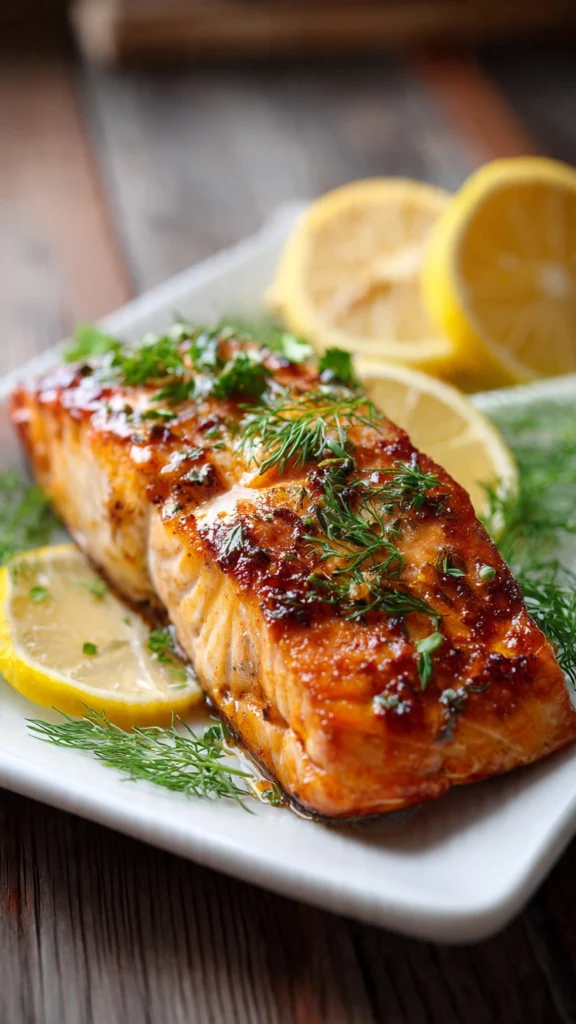
There’s something magical about perfectly baked salmon—the way it flakes apart at the gentlest touch of a fork, revealing tender, moist layers that practically melt in your mouth. This baked salmon recipe delivers that restaurant-quality experience right in your home kitchen, and the best part? It’s incredibly simple to make. Whether you’re planning a cozy weeknight dinner for your family, preparing an elegant dish for date night, or looking for a healthy meal prep option that actually tastes amazing, this recipe has you covered.
What makes this baked salmon truly special is the balance of flavors and textures. The high-heat baking method creates a beautifully caramelized exterior with just a hint of crispness, while keeping the inside buttery and succulent. The seasoning enhances the salmon’s natural richness without overpowering it, letting the fish shine as the star of the show. As it bakes, your kitchen fills with an irresistible aroma—slightly sweet, perfectly savory, with notes of herbs and citrus that make everyone gather around asking, “When’s dinner ready?”
Salmon is also one of the most forgiving fish to cook, especially when you follow a few key techniques. Unlike delicate white fish, salmon’s higher fat content means it stays moist even if you slightly overbake it. This recipe takes all the guesswork out of timing and temperature, giving you consistently perfect results whether you’re a beginner cook or a seasoned home chef.
Why You’ll Love This Recipe
- Ready in 20 minutes or less – Perfect for busy weeknights when you need something nutritious fast.
- Minimal cleanup – Everything bakes on one pan, so you’re not stuck washing a pile of dishes.
- Naturally healthy – Packed with omega-3 fatty acids and protein, without feeling like diet food.
- Foolproof technique – Hard to mess up, even if you’ve never cooked salmon before.
- Impressive presentation – Looks fancy enough to serve guests, but requires almost no effort.
- Customizable flavor – Works beautifully with dozens of seasoning combinations and marinades.
Ingredients Explained
Understanding what each ingredient does helps you become a better cook and makes it easier to adapt recipes to your taste.
Salmon fillets are the foundation of this dish, and their natural oil content is what keeps them moist during baking. Look for fillets that are about the same thickness so they cook evenly. Skin-on fillets are ideal because the skin protects the delicate flesh from direct heat and helps hold everything together, but skinless works fine too.
Olive oil or melted butter serves multiple purposes here. It prevents the salmon from sticking to the pan, helps seasonings adhere to the fish, and contributes to that gorgeous golden exterior. The fat also carries flavor beautifully and adds richness. Butter gives a more indulgent, slightly nutty flavor, while olive oil keeps things lighter and works well with Mediterranean-inspired seasonings.
Salt and pepper might seem basic, but they’re essential for bringing out salmon’s natural flavors. Salt also helps firm up the protein slightly, giving you better texture. Don’t skimp on these—properly seasoned fish makes all the difference between bland and delicious.
Garlic adds aromatic depth and a subtle savory note that complements salmon beautifully without competing with it. Whether you use fresh minced garlic, garlic powder, or garlic-infused oil, this ingredient creates complexity in what could otherwise be a one-note dish.
Lemon brightens everything up with acidity that cuts through the richness of the salmon. The citrus notes also enhance the fish’s natural flavors. Using both lemon juice and zest gives you the most impact—the juice for tanginess and the zest for aromatic oils.
Fresh herbs like dill, parsley, or thyme add freshness and visual appeal. Dill is classic with salmon for good reason—its slight anise flavor pairs perfectly with fatty fish. Parsley is more neutral and universally appealing, while thyme brings an earthy, woodsy note.
Step-by-Step Tips
Start with room temperature salmon by taking your fillets out of the refrigerator about 15-20 minutes before cooking. Cold salmon straight from the fridge won’t cook evenly—the outside can overcook before the center reaches the right temperature. Just let them sit on the counter while you preheat the oven and prep your other ingredients.
Pat the salmon completely dry with paper towels before seasoning. This is one of the most overlooked steps, but moisture on the surface prevents proper browning and can make your seasonings slide right off. A dry surface also helps achieve that slightly crispy, caramelized exterior everyone loves.
Preheat your oven to a high temperature (400-425°F) for the best results. Many recipes suggest lower temperatures, but higher heat gives you a beautiful caramelized top while keeping the inside moist and tender. If you’re nervous about overcooking, aim for 400°F; if you want more color and texture contrast, go for 425°F.
Line your baking sheet with parchment paper for the easiest cleanup and to prevent sticking. Aluminum foil works too, but lightly grease it first. If you’re feeling ambitious, place lemon slices directly on the pan and set the salmon on top—they’ll infuse subtle flavor and create a barrier between the fish and the pan.
Check for doneness early rather than relying solely on timing. Insert a fork into the thickest part and gently twist—the salmon should flake easily and look opaque throughout, with just a hint of translucency in the very center if you prefer it medium. An instant-read thermometer should register 125-130°F for medium or 135-140°F for well-done. Remember that salmon continues cooking for a minute or two after you remove it from the oven, so pull it slightly before it reaches your target temperature.
Let it rest for 2-3 minutes before serving. This allows the juices to redistribute throughout the fish, ensuring every bite is moist and flavorful instead of dry around the edges.
Substitutions & Variations
For the salmon: You can use any type of salmon—Atlantic, sockeye, coho, or king. Each has slightly different fat content and flavor intensity, but all work beautifully with this method. If salmon isn’t available or you prefer other fish, this technique works wonderfully with Arctic char, steelhead trout, or even thick white fish like halibut or cod (though these are leaner and require careful monitoring).
For the fat: Swap olive oil for avocado oil, melted ghee, or even sesame oil for an Asian-inspired twist. Coconut oil works if you’re going for tropical flavors. Each oil brings its own subtle flavor profile that can complement different seasoning directions.
For Mediterranean flavors: Add dried oregano, sun-dried tomatoes, capers, and olives. Top with crumbled feta cheese during the last few minutes of baking.
For Asian-inspired salmon: Use sesame oil, soy sauce or tamari, fresh ginger, and a touch of honey or maple syrup. Garnish with sesame seeds and sliced green onions.
For honey garlic salmon: Brush with a mixture of honey, minced garlic, and soy sauce before baking. The sugars caramelize beautifully at high heat.
For Cajun or blackened salmon: Coat with a spice blend featuring paprika, cayenne, garlic powder, onion powder, thyme, and oregano for a spicy kick.
For maple Dijon salmon: Whisk together maple syrup, Dijon mustard, and a splash of apple cider vinegar for a sweet-tangy glaze.
For herb-crusted salmon: Press a mixture of panko breadcrumbs, melted butter, fresh herbs, and parmesan cheese onto the top of the fillets before baking for extra texture.
Storage & Reheating
Refrigerator storage: Let your baked salmon cool to room temperature, then transfer it to an airtight container. It will keep well in the refrigerator for up to 3 days. Keep the fillets whole rather than flaking them apart—they’ll retain moisture better this way.
Freezer storage: While cooked salmon can be frozen for up to 2-3 months, the texture does change slightly upon thawing. If you plan to freeze it, wrap each fillet tightly in plastic wrap, then place in a freezer-safe bag with as much air removed as possible. Thaw overnight in the refrigerator before reheating.
Reheating in the oven: This is the best method for maintaining texture. Preheat your oven to 275°F, place the salmon in a baking dish with a tablespoon of water or broth, cover tightly with foil, and heat for about 15 minutes or until warmed through. The low temperature and added moisture prevent drying out.
Reheating in the microwave: While not ideal, it works in a pinch. Place salmon on a microwave-safe plate, add a damp paper towel over top, and microwave in 30-second intervals at 50% power until just warmed through. Be very careful not to overheat, as microwave reheating can make salmon rubbery.
Cold salmon: Honestly, leftover baked salmon is delicious cold and doesn’t necessarily need reheating. Flake it over salads, toss with pasta, stuff into sandwiches, or make salmon salad. The flavors often develop and meld even more overnight.
Serving Ideas
Baked salmon pairs beautifully with countless side dishes, making it one of the most versatile proteins in your dinner rotation.
Classic vegetable sides: Roasted asparagus, green beans, Brussels sprouts, or broccoli complement salmon perfectly. Toss your vegetables with olive oil, season them similarly to your salmon, and roast them on a separate pan during the same baking time.
Starchy sides: Creamy mashed potatoes, roasted baby potatoes, wild rice pilaf, quinoa, or couscous all work wonderfully. For something lighter, try cauliflower rice or a simple garden salad with vinaigrette.
Grain bowls: Build a complete meal by serving your salmon over brown rice, farro, or bulgur with roasted vegetables, avocado slices, and a drizzle of tahini sauce or yogurt dressing.
Pasta pairings: Flake leftover salmon into pasta with cream sauce, lemon butter sauce, or even a simple garlic and olive oil preparation. It’s particularly good with orzo, penne, or fettuccine.
Fresh and light options: In warmer months, serve your salmon alongside cucumber salad, tomato salad, Greek salad, or a simple arugula salad with shaved parmesan and lemon vinaigrette.
Wine pairings: A crisp white wine like Sauvignon Blanc, Pinot Grigio, or unoaked Chardonnay complements baked salmon beautifully. If you prefer red, try a light Pinot Noir. For non-alcoholic options, sparkling water with lemon, iced green tea, or a cucumber-mint infused water work wonderfully.
FAQs
Should I bake salmon with the skin on or off?
Skin-on is generally preferable because the skin acts as a protective barrier, keeping the delicate flesh moist while the skin crisps up. It also makes the salmon easier to flip or transfer without it falling apart. If you don’t enjoy eating the skin, you can easily peel it off after cooking—it will slide right off. However, skinless fillets work perfectly fine too; just be extra gentle when handling them and consider using parchment paper to prevent sticking.
How do I know when my baked salmon is done?
The most reliable method is using an instant-read thermometer—aim for 125-130°F in the thickest part for medium doneness with a slightly translucent center, or 135-140°F for well-done. Visually, properly cooked salmon should be opaque throughout with a vibrant color, and it should flake easily when gently pressed with a fork. The flesh will also appear to “pull apart” in distinct layers. Don’t wait until the fish is completely firm—it will continue cooking slightly after you remove it from the oven and can become dry if overcooked.
Can I use frozen salmon for this recipe?
Absolutely, but proper thawing is essential. The best method is to transfer frozen salmon to the refrigerator 12-24 hours before cooking, allowing it to thaw slowly and evenly. If you’re short on time, seal the salmon in a plastic bag and submerge it in cold water, changing the water every 30 minutes until thawed (usually 1-2 hours). Never thaw salmon at room temperature or in warm water, as this promotes bacterial growth. Once thawed, pat it very dry before proceeding with the recipe. Never try to bake salmon from frozen—it won’t cook evenly.
Why is my salmon sticking to the pan?
The most common culprit is not using enough oil or butter on the pan surface, or skipping parchment paper altogether. Even with non-stick pans, fish can stick, especially if the surface wasn’t properly heated or oiled. Another reason is flipping or moving the salmon too early—if you give it time to develop a slight crust, it releases more easily. Using parchment paper or a silicone baking mat eliminates this problem entirely and makes cleanup a breeze.
Can I prepare salmon ahead of time?
Yes, you can season the salmon up to 4 hours ahead and keep it covered in the refrigerator, but remove it 15-20 minutes before baking so it comes to room temperature. For best results, don’t add delicate fresh herbs or lemon juice until right before baking, as the acid can start “cooking” the fish and herbs can wilt. If you’re meal prepping, it’s better to bake the salmon fresh rather than baking it in advance, as reheated salmon never quite has the same texture as freshly baked.
What’s the white stuff that appears on my salmon?
That white substance is called albumin—a harmless protein that coagulates and is pushed out when salmon is cooked, especially at high heat or when overcooked. While it’s perfectly safe to eat, it’s not particularly attractive. To minimize albumin, avoid overcooking your salmon, brine it briefly in saltwater before cooking (pat dry after), bring it to room temperature before baking, and cook at a moderate temperature. A quick brine (4 cups water + 1/4 cup salt for 10 minutes) is especially effective at reducing albumin appearance.
Print
Perfect Baked Salmon
- Total Time: 20 minutes
- Yield: 4 servings 1x
- Diet: Gluten Free
Description
This easy baked salmon recipe delivers perfectly flaky, moist, and flavorful fish every single time. With a golden caramelized exterior and tender interior, this restaurant-quality salmon is ready in just 20 minutes with minimal effort and cleanup.
Ingredients
- 4 salmon fillets (6 oz each, about 1-inch thick)
- 2 tablespoons olive oil or melted butter
- 1 teaspoon salt
- ½ teaspoon black pepper
- 3 cloves garlic, minced
- 1 lemon (zested and juiced)
- 2 tablespoons fresh dill or parsley, chopped
- Lemon slices for serving (optional)
Instructions
- Preheat oven to 400°F (200°C). Line a baking sheet with parchment paper.
- Prepare salmon: Pat salmon fillets completely dry with paper towels. Place them skin-side down on the prepared baking sheet, spacing them evenly.
- Season: Brush each fillet with olive oil or melted butter. In a small bowl, mix salt, pepper, minced garlic, and lemon zest. Sprinkle this mixture evenly over the salmon.
- Add lemon juice: Drizzle fresh lemon juice over each fillet.
- Bake: Place in the preheated oven and bake for 12-15 minutes, depending on thickness. Salmon is done when it flakes easily with a fork and reaches an internal temperature of 125-130°F for medium or 135-140°F for well-done.
- Garnish and serve: Remove from oven, let rest for 2-3 minutes, then garnish with fresh dill or parsley and lemon slices. Serve immediately.
Notes
- Choosing salmon: Look for fillets of even thickness for uniform cooking. Skin-on fillets work best but skinless is fine too.
- Temperature tip: Remove salmon from refrigerator 15-20 minutes before baking for even cooking.
- Don’t overcook: Salmon continues cooking after removal from oven, so pull it slightly before your target doneness.
- Variations: Try honey garlic, Cajun spices, or Mediterranean herbs for different flavor profiles.
- Storage: Store leftovers in an airtight container in the refrigerator for up to 3 days.
- Prep Time: 5 minutes
- Cook Time: 15 minutes
- Category: Main Dish, Dinner
- Method: Baking
- Cuisine: American
Nutrition
- Serving Size: 1 salmon fillet (approximately 6 oz cooked)
- Calories: 320 kcal
- Sugar: 0g
- Sodium: 650mg
- Fat: 18g
- Saturated Fat: 3g
- Unsaturated Fat: 14g
- Trans Fat: 0g
- Carbohydrates: 1g
- Fiber: 0g
- Protein: 36g
- Cholesterol: 95mg
Keywords: baked salmon, easy salmon recipe, healthy dinner, quick salmon, oven baked salmon, garlic lemon salmon, weeknight dinner, high protein mealClaude est une IA et peut faire des erreurs. Veuillez vérifier les réponses.